
How Local Movers Handle Tight Staircases and Narrow Hallways
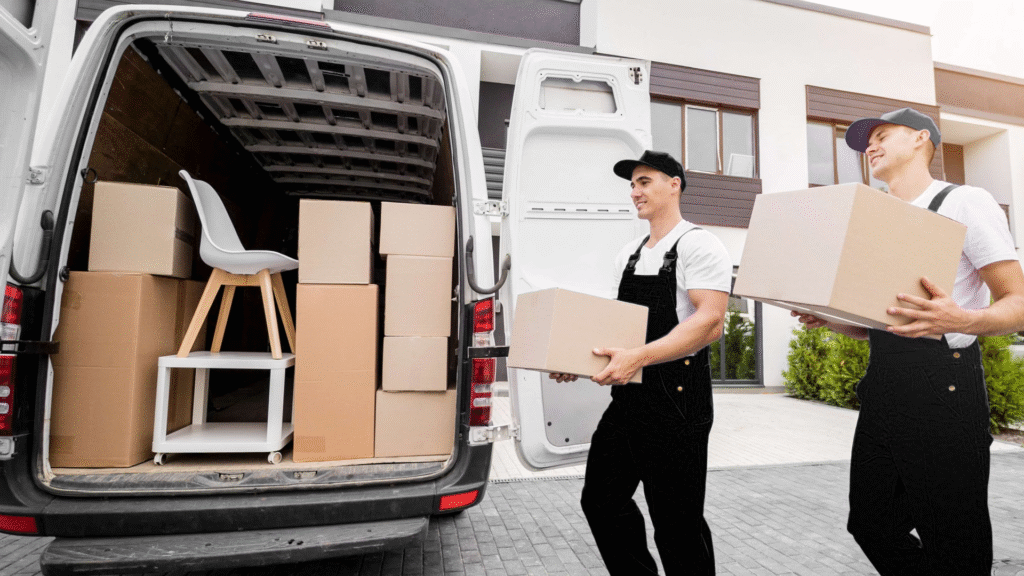
You’ve found the perfect new home, but now you’re staring down a narrow hallway and a winding flight of tight staircases, wondering how your sofa will ever make it up. If you’re searching for answers on moving furniture in tight spaces, you’re not alone. These spaces aren’t just inconvenient; they’re where most moving-day dramas actually happen. Trying to force a large item through them is a classic DIY mistake. So, how do the experts make it look effortless? This blog breaks down exactly how professional local movers handle these challenges. We’ll walk you through their planning, specialized tools, and proven techniques so you can understand how it’s actually done. Why Tight Staircases Are More Dangerous Than They Look You might think the hardest part is the heavy lifting, but with tight staircases, the real challenge is the physics. It’s not just about weight; it’s about balance, angles, and a simple question many homeowners ask: “how much weight can stairs hold?” Think about walking downstairs carrying a big box. You can’t see your feet, the weight pulls you forward, and every step feels like stepping on thin ice. Now imagine that with a 300-pound antique dresser. Staircases change the game entirely. The person at the bottom carries most of the load, visibility is terrible around corners, and a sharp turn on a landing can stop you dead in your tracks. This is exactly where a DIY move can go wrong. Without knowing how to distribute weight or navigate turns, you risk damaging your furniture, your walls, and, most importantly, your back. An experienced moving crew doesn’t just see stairs as a hurdle; they see a puzzle that needs the right plan and tools, which, as we’ll see next, they always have. How Local Movers Prepare Before Moving Anything So, how do movers avoid the staircase mistakes we just talked about? They never start by lifting. They start by looking. This planning is what separates a stressful scramble from a smooth move. Before moving day, a professional local moving company will conduct a walk-through. They’re not just estimating time; they’re gathering important data. They measure the width of every narrow hallway, note the ceiling height at each turn, and identify the tightest squeezes. They’ll spot the problem child, maybe it’s that oversized sectional or a grand piano, and ask, “how do movers move furniture in narrow hallways?” The answer starts here, with a plan. They assess the staircase itself, checking the stability of the handrail and the condition of the treads. This allows them to decide the exact order of movement and choose the right tools to help move heavy furniture from their truck. This means on moving day, there are no surprises, only solutions. And a huge part of that solution is having the right gear for the job, which is precisely what we’ll dive into next. Equipment Local Movers Use for Tight Staircases Remember how we talked about the planning stage? Well, that plan comes to life with the right gear. Think of these tools as a moving team’s superhero utility belt, each one has a special power for a specific job on your tight staircases. What Equipment Do Movers Use for Stairs? Ever tried to carry a full filing cabinet up stairs with a friend? It’s awkward, unbalanced, and a sure way to a sore back. This is where professional equipment to move heavy objects up stairs changes everything. It’s not about being stronger; it’s about being smarter with the weight. This moving equipment for stairs solves the core problem of weight. But what about bulky items that are just plain big? Stair Sleds and Stair Rollers So, what happens when you have a huge, flat item like a boxspring or a solid headboard? You might hear your mover say, “Let’s use the sled.” Stair sled moving might sound complicated, but the concept is quite simple. Think of it like a conveyor belt or a slide for your furniture. A sturdy, padded sled (often a flat piece of slick material) is placed on the staircase. The item is secured to it and then carefully guided down, sliding smoothly from step to step under full control. When do they use it? Mostly for large, flat, and heavy items that are too clumsy to carry or tip around a corner. It’s also the go-to method for protecting delicate wooden stairs from dings and scrapes, as the sled creates a buffer. This is a perfect example of how the right tool doesn’t just make the job easier; it makes it safer for your home and your belongings. How Movers Move Large Furniture on Stairs Now that you’ve seen the tools, let’s talk about how movers actually use them. Because having a stair dolly is one thing, knowing exactly how to angle a couch so it clears the ceiling on a turn is a whole other skill. How to Move a Heavy Couch Upstairs You’re probably thinking, “What is the easiest way to move heavy furniture up stairs?” With a couch, the answer isn’t just “muscle.” It’s a mix of technique and the right gear we just talked about. First, they almost always remove the legs if they can. Then, they’ll use lifting straps, not just to carry it, but to control it. One mover guides from the top, another supports from below, and they communicate with every step. The key is keeping the couch at an angle where it’s not fighting the slope of the stairs. They might even flip it on its side or back to find the path of least resistance through that tricky turn at the landing. Moving Wardrobes and Tall Furniture Down Stairs Moving wardrobe down stairs is a different kind of puzzle. The big fear is it tipping forward. So, movers never let it lean over the stairs. They keep it as vertical as possible, often with one person at the top holding it steady and another at the bottom guiding its base. Doors and drawers
